AI in Schools: What Responsible Adoption Actually Looks Like
AI in Schools: What Responsible Adoption Actually Looks Like
Independent school leaders are under a particular kind of pressure right now.
The board is asking about AI. Parents are asking about it. Teachers are experimenting with it on their own. Vendors are offering it. Peer schools are announcing it. And the Head of School, the business office director, the academic dean, and the CFO are all trying to figure out what responsible adoption actually means inside an institution that runs on trust, serves children and families, handles sensitive data, operates with a lean team, and cannot afford to get it wrong.
That pressure is real. So is the complexity.
A school is not a technology company. It is not a startup. It is not a business with a single bottom line and a risk tolerance built around rapid iteration. It is a mission-driven institution where the operating model touches academics, enrollment, development, finance, HR, facilities, family communication, student records, and board governance — often simultaneously, often with the same small team.
AI decisions in that environment are not simple. But they are also not as complicated as the vendor pitch makes them sound.
The Conversation Most Schools Are Having
Most AI conversations in independent schools right now start in the wrong place.
They start with a demo. A vendor shows what their tool can do. The outputs look impressive. Someone mentions efficiency. Someone else mentions a competitor school that has already implemented something. A committee gets formed. A pilot gets proposed.
What almost never happens first is the question that should open every AI conversation in a school:
Where is our operation actually struggling, and what is causing it?
That question changes everything. It moves the conversation from what AI can do to where the organization actually needs help. And in most schools, that honest conversation reveals something important: the pain is usually not a technology problem.
It is a process problem. A data problem. A documentation problem. A systems problem. A communication problem. Or a change management problem that technology alone will not fix.
AI introduced on top of those problems does not solve them. It accelerates them.
What Schools Are Actually Dealing With
Independent schools — particularly small to mid-sized ones — tend to share a recognizable set of operational challenges.
Systems that do not talk to each other. Student information lives in one platform. Enrollment and re-enrollment runs through another. The business office uses a separate system for tuition and billing. The development office manages donor records in yet another place. And across all of it, Google Sheets has quietly become the real operating system — tracking what the official systems cannot, filling gaps that were never designed to exist, held together by institutional memory that lives in one or two people's heads.
Duplicate data entry is everywhere. A family's contact information has to be updated in three places. A student's enrollment status changes and someone has to manually notify finance, the registrar, and the development office. An address correction made in one system does not flow anywhere else.
SOPs that were never written or last updated years ago. Onboarding that depends on whoever happens to be available. Reporting that gets built from scratch every month because there is no standard template or reliable data pull.
And underneath all of it, staff who are talented and committed and carrying far more friction than they should have to.
That is the operating environment AI is being asked to enter. And that matters enormously — because AI does not fix those problems. It inherits them.
The Specific Risks Schools Face
Schools handle some of the most sensitive information in any operating environment. Student records. Family financial data. Financial aid decisions. Employee records. Donor information. Health and behavioral data. Communications between families and leadership.
Every one of those categories carries legal, ethical, and reputational risk if it ends up in the wrong place.
The risk of shadow AI in schools is particularly real. Teachers, staff, and administrators are already using AI tools in their daily work — drafting emails, summarizing documents, building lesson materials, answering parent questions. Some of that use is harmless. Some of it involves information that should never be entered into an external AI platform. And most of it is happening without any policy, any approved tool list, or any training about what responsible use actually looks like.
This is not a criticism of the people doing it. It is a governance gap that leadership has not yet closed.
Schools that have not defined their AI policies, approved their tools, established their data rules, and communicated clear expectations to staff are not AI-free. They are unmanaged. And unmanaged AI use in a school environment is a risk that compounds quietly until it does not.
What Responsible Adoption Actually Looks Like
Responsible AI adoption in a school does not start with a tool. It starts with an honest look at the operation.
It starts by asking where work is harder than it needs to be. Where staff are spending time on low-value tasks that technology could assist. Where data is unreliable enough that AI would make it worse, not better. Where processes are clear enough to support automation and where they need to be cleaned up first.
It starts by mapping how work actually happens — not how the policy manual says it should happen, but what employees actually do on a normal day, what workarounds they have built, and what shadow systems they have created because the official process does not meet the need.
It starts by getting honest about data. Which information is current and trustworthy? Which is scattered, incomplete, or inconsistent? Which systems need to be integrated or replaced before AI output can be reliable?
And it starts by having the governance conversation before the vendor conversation. What tools will be approved? What data will never be entered into an AI platform? Who reviews AI output before it goes to families, to the board, to donors? Who owns the result when AI assists with a financial report, a parent communication, or a development letter?
These are leadership questions, not technology questions. And they need leadership answers before any tool goes live.
Where AI Can Genuinely Help Schools
None of this means AI does not belong in schools. It does. There are real, practical opportunities — but they become valuable only after the process and governance work is done.
Drafting routine parent communications from approved templates, with human review before anything is sent. Summarizing board packets and financial narratives once the underlying data is clean and verified. Building FAQ resources for common family questions once the approved answers have been reviewed and organized. Supporting enrollment communication workflows once the process is clearly mapped. Assisting with SOP documentation once the actual process has been walked through and confirmed.
These are not glamorous use cases. They are high-value ones. They remove real friction from real people who are already stretched. And they can be done responsibly because they involve low-to-moderate risk, clear human review, and a defined process underneath the AI.
The organizations that succeed with AI adoption are not the ones that move first. They are the ones that move with the most clarity about what problem they are actually solving.
The Leadership Responsibility
Heads of Schools and business office leaders are being asked to navigate AI during one of the most pressured moments in independent school history — managing enrollment challenges, cost pressures, staffing complexity, board expectations, and family demands simultaneously.
AI adoption is one more thing on a list that is already too long.
But the leaders who take the time to do this right — to define the pain before selecting the tool, to clean the process before automating it, to govern the risk before scaling the use — will build something their peers will not have: an operation that uses AI to create capacity, not chaos.
That is what responsible adoption looks like.
Not the fastest implementation. Not the most impressive demo. Not the longest list of AI features in the next board report.
The clearest thinking. The most honest diagnosis. The most disciplined path forward.
That is what the students, the families, the staff, and the mission deserve.
The clearest thinking. The most honest diagnosis. The most disciplined path forward.
That is what the students, the families, the staff, and the mission deserve.
Book a Discovery Call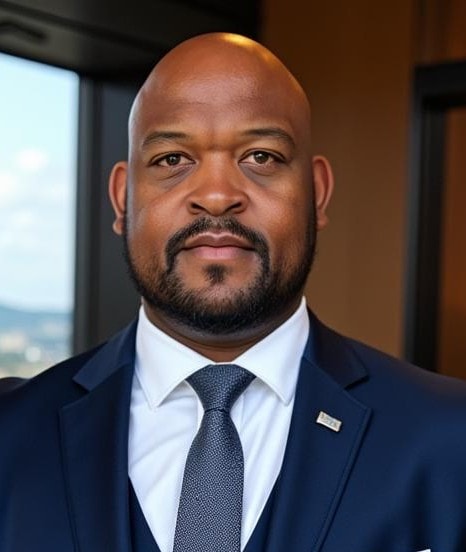
Troy Allen
Troy Allen is the founder of The Lean AI Coach and author of The AI Decision. He helps executives in independent schools, nonprofits, and small to mid-sized businesses find the operational pain, fix the process, and apply AI only where it creates measurable value.